
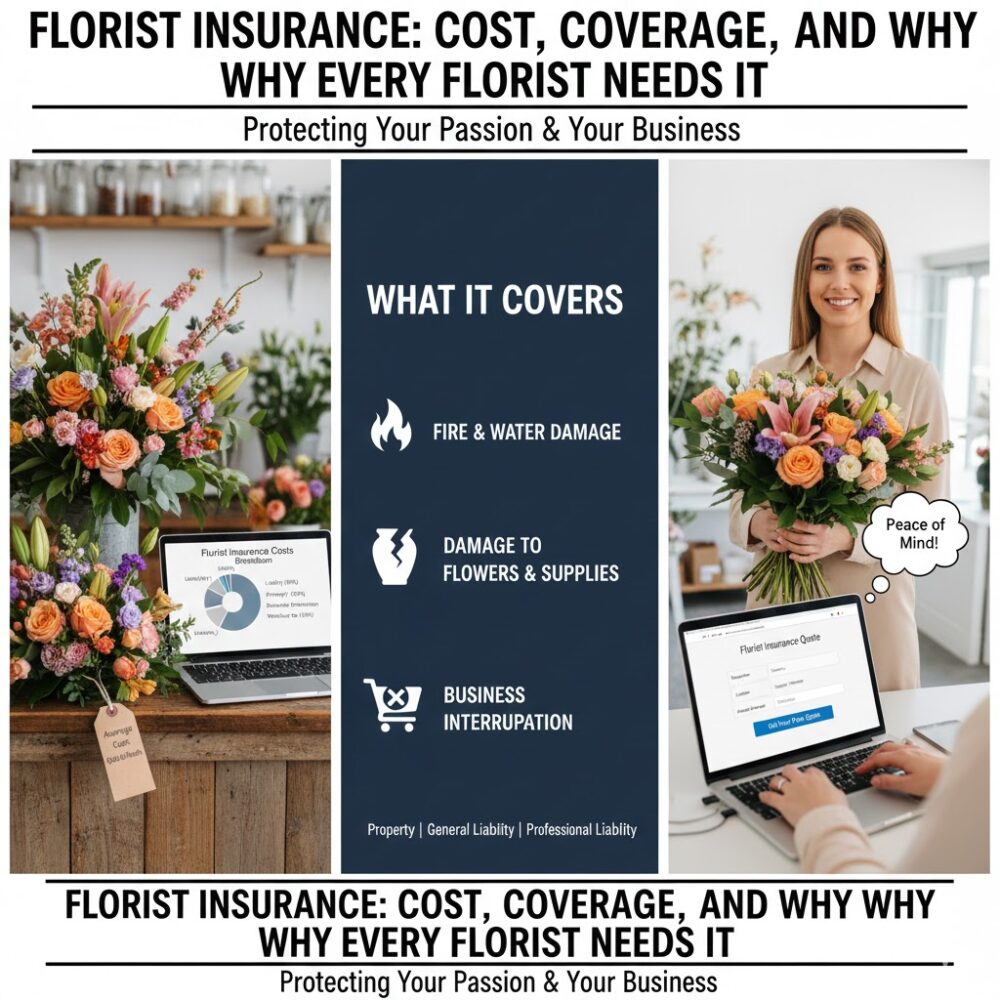
Running a florist business looks beautiful from the outside—fresh flowers, weddings, happy customers. But behind the scenes, florists face very real risks: broken vases, slip-and-fall accidents, damaged wedding arrangements, delivery vehicle issues, and expensive spoiled inventory. That’s why florist insurance isn’t optional—it’s essential.
If you’re searching for florist insurance, florist business insurance, or insurance for florists, you’re likely asking one of these questions: Do florists really need insurance? What type of insurance does a florist business need? How much does florist insurance cost? Where do florists get business insurance? Do wedding florists need special coverage? This guide answers all of that—clearly, honestly, and without sales fluff.
What Is Florist Insurance?
Florist insurance is a set of business insurance policies designed to protect florists from financial losses related to customer injuries, property damage, wedding and event liability, delivery accidents, damaged or spoiled flowers, and lawsuits or legal claims. It applies to retail flower shops, home-based florists, wedding and event florists, and mobile or delivery florists. In short, if you sell flowers professionally, you need florist insurance.
Do Florists Need Insurance?

Yes. Florists absolutely need insurance, even small or home-based businesses. Flowers are often placed in high-traffic areas, water spills create slip hazards, weddings involve tight timelines and high expectations, delivery drivers increase accident risk, and venues often require proof of insurance. Even one small incident can cost thousands without coverage.
Why Insurance Is Important for Florists
Florists work with fragile, perishable, and high-value items—often under pressure. Insurance protects you when things don’t go as planned. Real-life situations include a guest tripping over a floral stand at a wedding, a cooler failure ruining thousands of dollars in inventory, a delivery driver causing property damage, or a bride claiming financial loss due to damaged arrangements. Without insurance, these costs come directly out of your pocket.
Types of Insurance for Florists
Florist insurance isn’t a single policy—it’s a combination of coverages.
1. General Liability Insurance (Most Important)
Florist liability insurance covers customer injuries, property damage, and legal fees or settlements. This is the minimum coverage most florists need, and many venues will not work with you unless you have general liability insurance.
2. Commercial Property Insurance
This protects refrigerators and coolers, floral inventory, tools and supplies, and shop furniture or displays. It’s especially critical for brick-and-mortar florists.
3. Florist Business Insurance (Business Owner’s Policy – BOP)
A BOP bundles general liability, property insurance, and business interruption coverage. It’s often the most cost-effective option for florist businesses.
4. Florist Vendor Wedding Insurance
If you work weddings or events, you may need florist vendor wedding insurance. It covers event-specific liability, venue insurance requirements, and higher-risk setups. Many wedding venues require florists to name them as additional insured.
5. Commercial Auto Insurance
If you deliver flowers using a business vehicle, personal auto insurance may not cover business use. Commercial auto insurance protects you during deliveries.
6. Workers’ Compensation Insurance
If you have employees, workers’ compensation is required in most states. It covers on-the-job injuries, medical bills, and lost wages.
Do Florist Businesses Need Liability Insurance?
Yes. Florist businesses need liability insurance regardless of size. This includes home-based florists, part-time florists, and solo wedding florists. Liability coverage is often required by event venues, commercial landlords, and corporate clients.
Do Florists Need a License and Insurance?
Licensing requirements vary by state and city, but insurance is commonly required when renting commercial space, working weddings or events, selling at markets or pop-ups, or hiring employees. Even when not legally required, insurance protects both your reputation and finances.
How Much Does Florist Insurance Cost?
Most florists pay between $30 and $75 per month, or roughly $350 to $900 per year. Costs depend on business size, annual revenue, number of employees, wedding or event exposure, and delivery vehicles. One claim can easily cost more than years of premiums, making florist insurance well worth the cost.
Where Do Florists Get Business Insurance?
Florists typically get insurance through business insurance brokers, industry-specific insurers, online commercial insurance platforms, or wedding vendor insurance providers. It’s best to work with providers experienced in small business and event-based coverage.
Florist Insurance for Weddings: What You Must Know
Wedding florists face higher risk than retail florists. Venues often require $1 million or more in liability coverage, a Certificate of Insurance (COI), and the venue listed as additional insured. Without proper florist wedding insurance, you can lose contracts instantly.
Common Mistakes Florists Make With Insurance
Common errors include assuming homeowner’s insurance covers business activity, skipping wedding-specific coverage, using personal auto insurance for deliveries, underinsuring inventory, and not reviewing policy exclusions carefully.
Pros and Cons of Florist Insurance
Pros: protects against lawsuits, required by venues and landlords, builds professional credibility, covers costly accidents, and provides peace of mind.
Cons: monthly cost and policy complexity if not explained well. For most florists, the pros far outweigh the cons.
Frequently Asked Questions
Do florists need insurance? Yes. Florists face liability, property, and event-related risks that insurance protects against.
What insurance do florists need? At minimum, general liability insurance. Many also need property, wedding vendor, and commercial auto coverage.
How much is florist insurance? Most florists pay between $30 and $75 per month.
Is florist wedding insurance different? Yes. Wedding florists often need higher liability limits and venue-specific coverage.
Where do florists get business insurance? Through insurance brokers, online insurers, and providers specializing in small business or event insurance.
Final Thoughts: Is Florist Insurance Necessary?
If you run a florist business—whether from a storefront, home studio, or wedding venue—insurance is not optional. Florist insurance protects your income, your reputation, your clients, and your future business growth. Flowers may be delicate, but your business protection shouldn’t be.
Discover more from USASEOIT
Subscribe to get the latest posts sent to your email.
Leave a Reply