
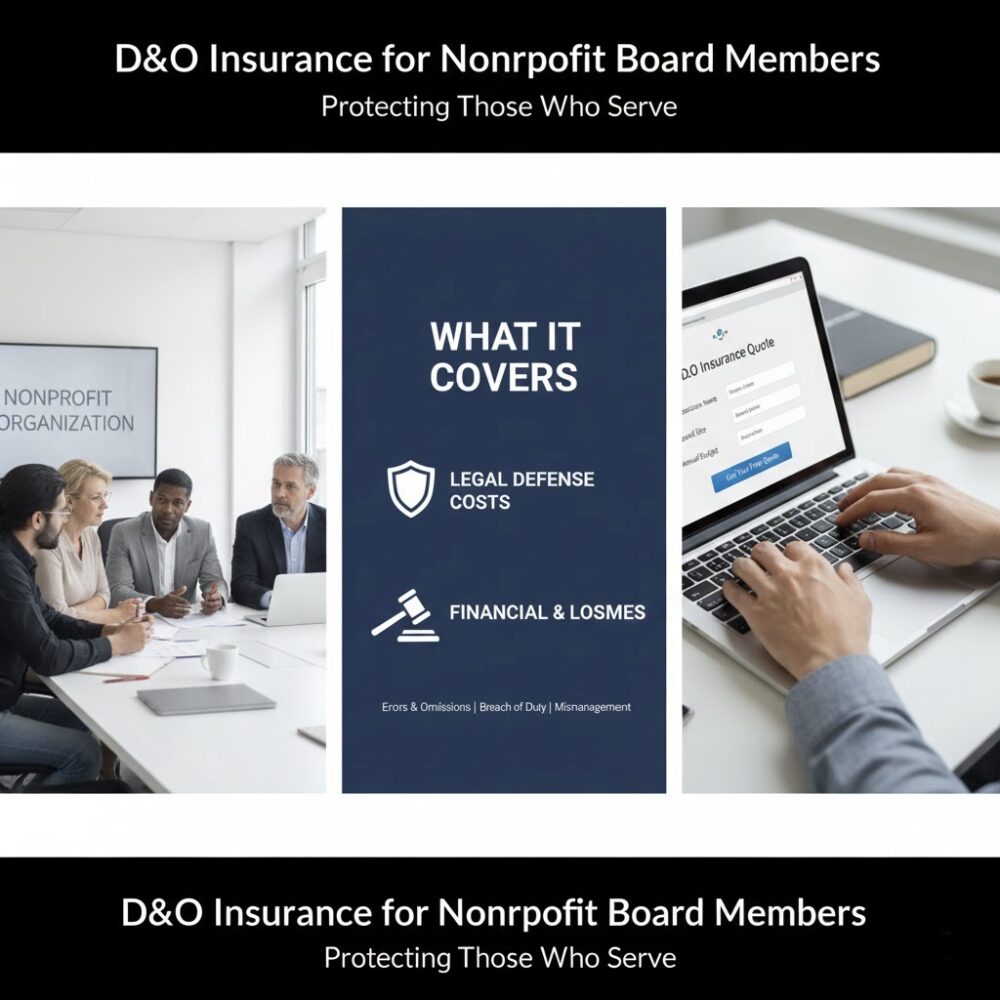
Serving on a nonprofit board is an act of commitment, leadership, and trust. Board members donate their time to support causes they care deeply about—education, health, religion, community service, advocacy, and more. But many board members don’t realize this: one lawsuit can put their personal assets at risk. That’s why D&O insurance for nonprofit board members isn’t just a nice to have it’s one of the most critical protections a nonprofit organization can provide.
If you’re searching for d&o insurance nonprofit board members, d&o insurance for nonprofit board members, directors and officers insurance, nonprofit board insurance, or d&o insurance versus a for nonprofit board members, you’re likely asking one core question: Am I personally protected if something goes wrong? This guide answers that clearly, honestly, and without legal jargon.
What Is D&O Insurance for Nonprofit Board Members?

Directors and Officers (D&O) insurance protects nonprofit board members, officers, and executives from personal financial loss if they are sued for alleged wrongful acts committed while serving the organization. These lawsuits don’t require fraud or bad intentions. Claims often arise from employment decisions, financial oversight issues, governance disputes, regulatory compliance failures, conflicts of interest, or alleged mismanagement. Even if a claim is unfounded, legal defense alone can cost tens or hundreds of thousands of dollars.
Why Nonprofit Board Members Are Personally at Risk
Many board members assume, “I’m a volunteer—so I can’t be sued.” Unfortunately, that’s not true. Nonprofit board members can be sued by employees, volunteers, donors, grant agencies, government regulators, beneficiaries, vendors, or even other board members. Lawsuits often name individual board members, not just the organization. Without D&O insurance, personal assets such as savings, homes, and retirement accounts can be exposed.
What Does D&O Insurance Cover for Nonprofit Board Members?
1. Personal Liability Protection
D&O insurance protects board members’ personal finances when they’re accused of wrongful acts related to their board duties. Covered claims may include breach of fiduciary duty, misuse of funds, failure to follow bylaws, poor governance decisions, and discrimination or harassment allegations. Coverage applies even if allegations are later proven false.
2. Legal Defense Costs
Defense costs are often the most expensive part of a lawsuit. D&O insurance pays for attorneys’ fees, court costs, and settlements or judgments when applicable. Without coverage, board members may have to pay these costs themselves.
3. Employment Practices Claims (Often Included)
Many nonprofit D&O policies include Employment Practices Liability Insurance (EPLI). This covers wrongful termination, discrimination, harassment, retaliation, and failure to promote. Employment-related claims are among the most common lawsuits nonprofits face.
What D&O Insurance Does NOT Cover
Understanding exclusions is just as important. D&O insurance typically does not cover fraud or criminal acts once proven, intentional wrongdoing, personal profit gained illegally, bodily injury or property damage (covered by general liability), or professional negligence (covered by professional liability). This is why nonprofits usually carry multiple insurance policies, not just D&O.
D&O Insurance vs. General Liability for Nonprofit Board Members
This is one of the most misunderstood topics. D&O insurance protects against governance decisions, financial oversight, employment practices, and fiduciary responsibilities. General liability insurance protects against slip-and-fall injuries, property damage, and bodily injury claims. General liability does not protect board members from governance-related lawsuits. That’s why the comparison “D&O insurance versus A for nonprofit board members” (often meaning general liability) matters so much—they cover completely different risks.
Do Nonprofit Board Members Need D&O Insurance?
Yes. Every nonprofit with a board should carry D&O insurance. Many experienced professionals refuse to serve on a board without it. Grant providers often require proof of coverage, and it’s widely considered a best practice in nonprofit governance. Offering D&O insurance isn’t just protection—it signals responsible leadership.
How Much Does D&O Insurance Cost for Nonprofits?
Most nonprofit D&O insurance policies cost between $600 and $3,000 per year. Pricing depends on organization size, annual revenue, number of employees, prior claims history, and the type of services provided. Smaller nonprofits usually pay less, while larger organizations with staff or government funding pay more.
Who Is Covered Under Nonprofit D&O Insurance?
Coverage typically includes board members, officers, executive directors, trustees, committee members, and volunteers in leadership roles. Policies usually apply to past, present, and future board members for actions taken during their service.
Nonprofit Board Insurance: Why D&O Is Essential
When people search for nonprofit board insurance, they are almost always referring to D&O insurance. Board decisions carry legal responsibility, volunteer status does not remove liability, and lawsuits across the nonprofit sector are increasing. D&O insurance allows board members to focus on the mission, not personal legal risk.
Common Scenarios Where D&O Insurance Protects Board Members
Examples include a former employee suing for wrongful termination, a donor claiming misuse of funds, a regulatory agency alleging compliance failures, a volunteer claiming discrimination, or disputes triggered by a merger or dissolution. In all these situations, individual board members can be named.
Where to Get D&O Insurance for Nonprofit Board Members
Nonprofits typically obtain D&O insurance through nonprofit-focused insurance brokers, carriers specializing in nonprofit liability insurance, or insurance programs endorsed by nonprofit associations. It’s important to work with professionals who understand nonprofit governance risks.
Pros and Cons of D&O Insurance for Nonprofits
Pros: protects personal assets of board members, encourages qualified leaders to serve, covers expensive legal defense costs, demonstrates responsible governance, and is often required by funders.
Cons: annual premium cost and policy complexity if poorly explained. For most nonprofits, the benefits far outweigh the cost.
Frequently Asked Questions
What is D&O insurance for nonprofit board members? It protects board members and officers from personal liability related to governance and management decisions.
Do nonprofit board members have personal liability? Yes, board members can be personally named in lawsuits.
Is D&O insurance required for nonprofits? Not always legally required, but strongly recommended and often expected by funders.
Does general liability cover board members? No, it does not cover governance or fiduciary claims.
How much D&O insurance does a nonprofit need? Most nonprofits carry at least $1 million in D&O coverage.
Final Thoughts: Is D&O Insurance Worth It for Nonprofit Board Members?
If you serve on—or manage—a nonprofit board, D&O insurance is essential protection. It safeguards personal assets, organizational stability, board recruitment, and long-term mission success. Without it, one lawsuit can undo years of good work. Strong missions deserve strong protection.
Discover more from USASEOIT
Subscribe to get the latest posts sent to your email.
Leave a Reply